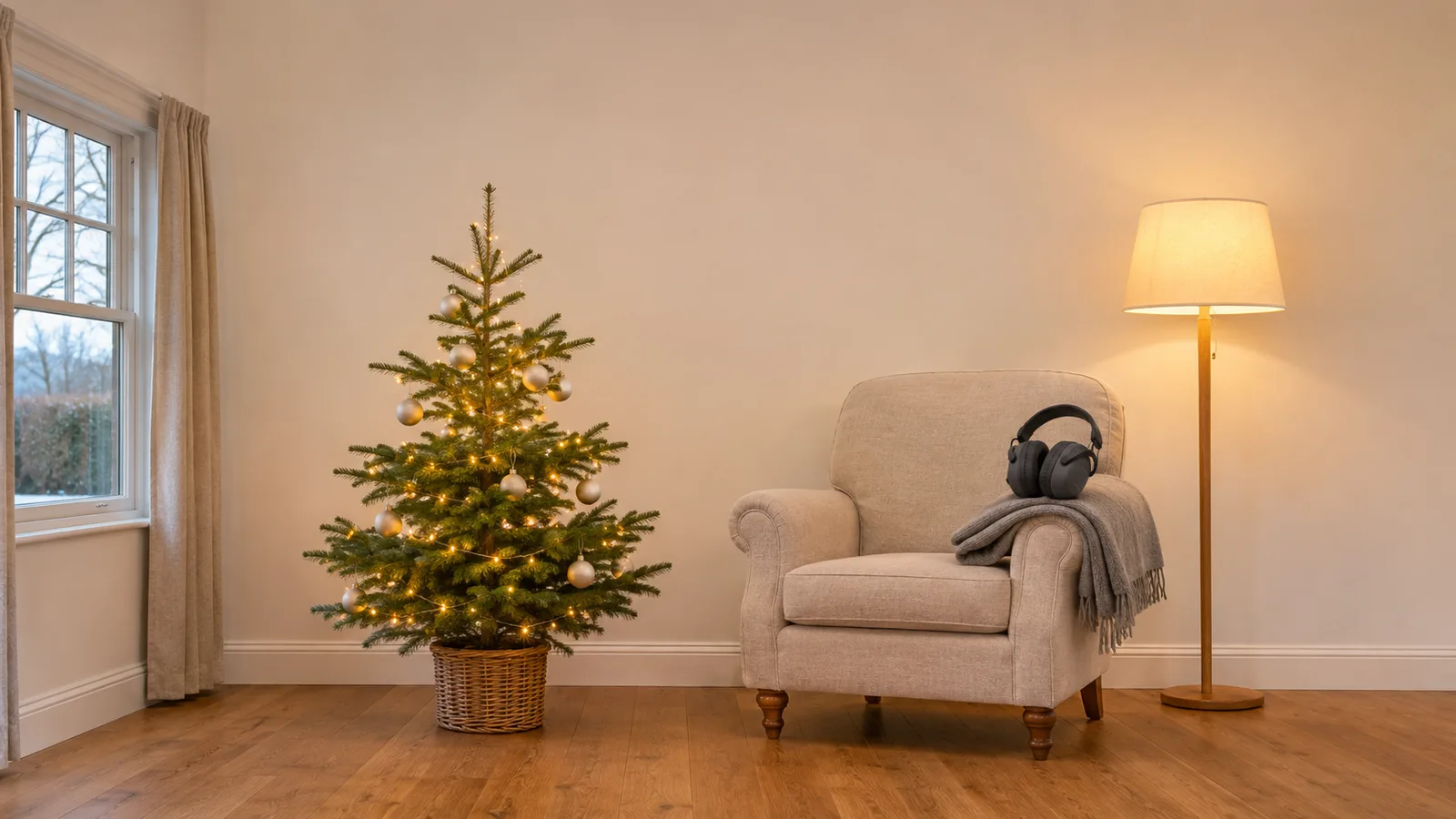
Christmas changes how a home looks, sounds and smells. For many families that is the pleasure of it. For an autistic adult it can be the hard part. The lights flash, the radio plays all day, dinner is different and everyone is wearing something scratchy.
This guide is for families and carers of autistic adults in Sutton-in-Ashfield, Mansfield and the rest of Nottinghamshire. It looks at one thing only: how to plan a sensory-friendly Christmas. Much of it will also help anyone who finds noise, bright light or strong smells difficult.
It draws on the National Autistic Society guide, Christmas tips for autistic people and families, which we recommend reading in full.
What makes a sensory-friendly Christmas
The National Autistic Society puts it simply: “Autistic people can experience sensory input differently.”
In everyday terms, some people are more sensitive than most to light, sound, smell, taste or touch. Some are less sensitive. Some are both, depending on the sense and the day.
So there is no single right way to do Christmas. The person you care for is the expert. Ask what they like and what they would rather avoid, in whatever way they communicate best, and plan from there.
Noise
- Limit time in loud, crowded places such as busy shops and Christmas markets. Go at a quiet time, or keep the visit short.
- Ear defenders, headphones or earplugs can make a noisy room bearable.
- Turn the television and the music off during the meal.
- Leave the crackers out, or pull them in another room.
Lights and decorations
- Choose lights that stay on steadily. Flashing and colour-changing sets are harder for some people. Sunglasses indoors are fine if they help.
- Put decorations up a little at a time, so the house does not change overnight.
- Keep one room, or one corner, free of decorations. That is somewhere to go when the rest of the house is too much.
Clothes and greetings
- A Christmas jumper, a paper hat and smart clothes are all optional. Comfortable, familiar clothes are fine.
- Hugs, kisses and handshakes are optional too. A wave or a hello is a proper greeting. Tell relatives this before they arrive, so that nobody is put on the spot at the door.
- Rocking, hand movements or using a fidget item, often called stimming, can be a way of coping. Let it happen.
Food and mealtimes
- Christmas dinner does not have to be Christmas dinner. If the person eats the same meal most days, serve that meal. They can still sit at the table with everyone else.
- Keep mealtimes at the usual hour where you can.
- Give people room at the table. Sitting elbow to elbow is hard for someone who dislikes being touched.
- Go easy on scented candles, room sprays and strong perfume. Smell builds up quickly in a warm, full house.
A quiet place and a sensory kit
Agree a quiet place in advance and make sure visitors know it is not to be disturbed.
Put together a small kit to keep nearby: ear defenders, a favourite object, something to fidget with, a drink and a snack. The National Autistic Society calls this a sensory kit. It is as useful on a day out as it is at home.
Plan the breaks before they are needed. Half an hour somewhere quiet after lunch can save the afternoon.
How Every Sensation can help
Every Sensation is a specialised day care centre for adults with physical and learning disabilities and complex needs. We are at Birchwood Grange, Kings Mill Road West, Sutton-in-Ashfield.
The centre has a Snoezelen room, an immersive room, a sensory cinema, a one-to-one room and a hydro pool.
If you would like to talk about day care this winter, or to ask what a day here could look like for the person you care for, call 01623 557560 or contact us.
You may also find these useful:
- Choosing the right sensory activities for your loved one’s needs
- How sensory rooms and immersive therapy support wellbeing in adult care
More guides on autism and Christmas:
- Autism and Christmas routine: how to plan the festive weeks, from Hebburn Day Care
- Autism and Christmas presents, visits and gatherings, from Inspired Day Care in Doncaster
- Autism and Christmas: a guide for parents and carers, from Every Sensation Children Services
Source: National Autistic Society, “Christmas tips for autistic people and families”, read on 24 November 2026. Every autistic person is different. This guide is general information and does not replace advice from the professionals who know the person you care for.
